A Contented Cat
- August 13, 2018
- Blog
- No Comments
Nine seconds of bliss. Turn up the volume to hear my Frankie. 🙂
Nine seconds of bliss. Turn up the volume to hear my Frankie. 🙂
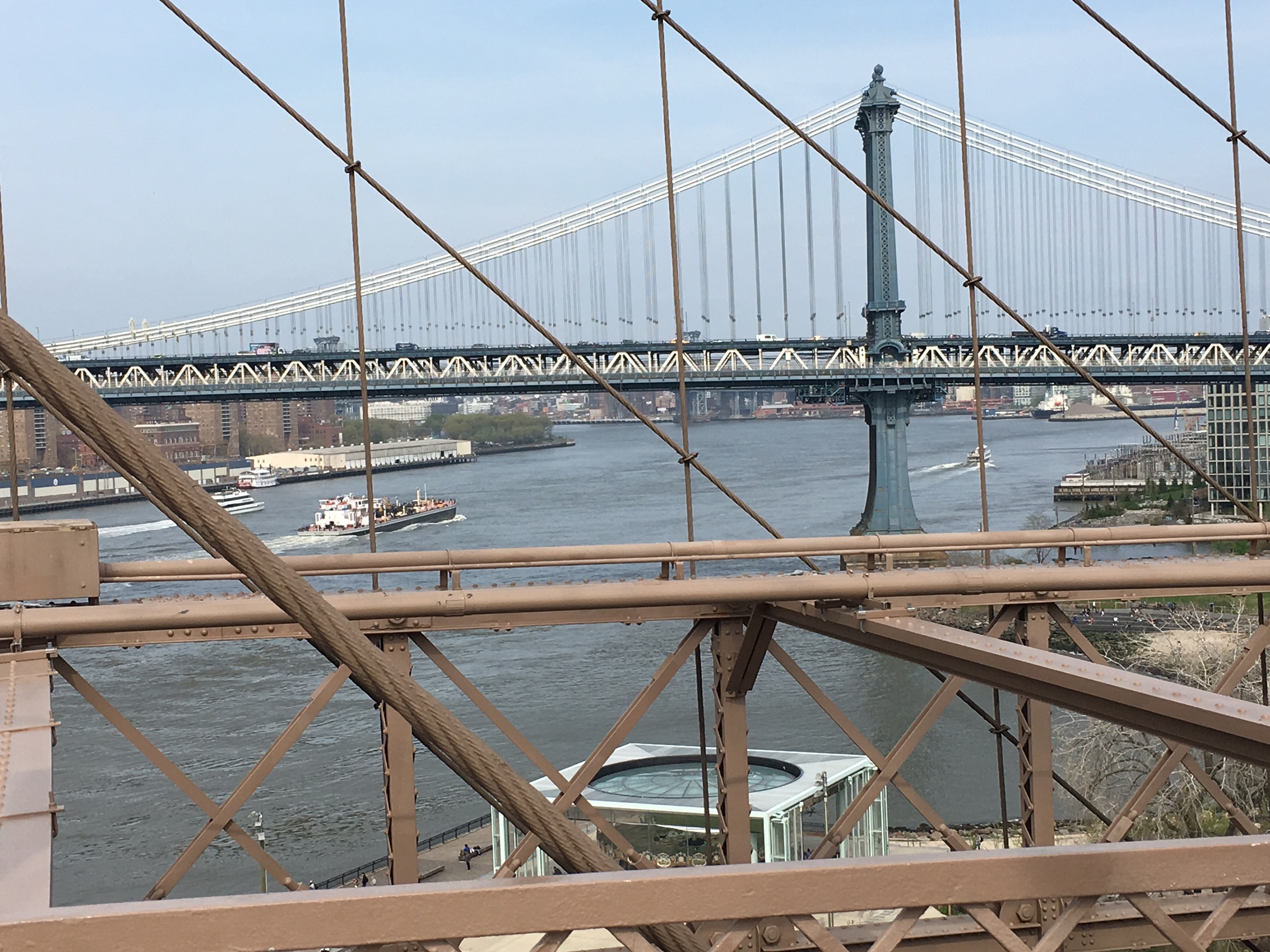
And what does one do when sweat slicks along the skin and hair becomes limp or frizzed out? When walking one block leaves clothes sticking like a rubber glove and suddenly there’s no energy to take another step?
Write about it, of course.
New York City is an open sauna right now. The good news? The muggy weather is great for dieting (nausea will do that to you).
It’s also good for starting conversations. The misery of melting outside, rain or sun, creates a feeling of fellow suffering. Just saying “Some weather, huh?” as I walk past people walking their dogs gets a relieved reply, as if we’ve unburdened ourselves of some deep secret.
Otherwise, I’m hard pressed to come up with a good justification for this nasty humidity. But I can take notes and use it in a future story.
Stay cool, everybody! And be nice to the tourists—poor things—who came here in the sticky month many New Yorkers try to escape.
This anthology of five tales, each centering on one of the five elements, will please urban fantasy and horror fans, as well as fans of lesbian fiction, women’s fiction, and romance.
At Amazon: mybook.to/Elements_Tales

Elements: Tales from the Substratum
Welcome to our universe of tales centering on earth, water, fire, air, and ether. We hope our fans of urban fantasy, horror, lesbian fiction, and women’s fiction will be pleased.
Here are the five stories we’ve written for you:
In these stories, our characters navigate the five elements of the universe, seeking to belong, to be safe, and to live happily.
We hope you enjoy them.
Available here at Amazon.
A new post by author Carrie Vaccaro Nelkin. Enjoy!
A few years ago, when my husband and I drove to Vermont for a long weekend, I felt a peculiar kind of anticipation. This was my first trip back to the state since completing the final draft of my novel Snare, which I’d worked on for more years than I care to admit. An important part of the novel was set in Vermont, largely from memory.
I’d started and trashed so many novels that getting to the end of this one had become an obsession. I’d had to live in my head for a long time to recall vividly the foliage and the light and the graded roads and the thickness of the dark in December. Now, as we pushed north on the Taconic Parkway, I felt as if I were traveling into the story I’d spun.
We stopped for lunch at a diner where I’d set a scene. Three of my characters were with us, discussing their next move as they chowed down on road food. This bizarre overlay continued through the weekend as we drove down the street where my villain lived with his sister and up a mountain road fronting the house where my heroine and her friends had stayed.
It was the first time that I found myself residing in two worlds at once—the real one, and the one I’d created, which had become no less real to me.
It didn’t matter that I had added to, subtracted from, and altered enough things about the locations to make them distinct from their nonfictional counterparts. I had manufactured a parallel universe, and this fact was almost as scary as it was enthralling.
It made me realize how much a writer can end up living inside her head, in places and with people no one else can quite share the same way. As with all alternate worlds and imaginary friends, this can be a comfort and a haven—or something very different. No one can follow me into that sphere, although my writer friends understand the pull.
All art can be obsessive. I have friends who are afraid to start painting again because they suspect it will consume them. They can’t look at a building or road without seeing line, perspective, and symmetry. I know writers who can’t write unless they carve a huge chunk of time that will allow them to live inside the writing a while without it spilling over into the rest of their lives. And I know writers who are writing in the back of their brain every single moment. The perspective we gain on such matters is always hard won.
These days, when I walk down a certain street near our home, I enter one of two fictional pieces where this road figures. Everything transports me, from the smell of trampled pine needles and dog droppings to the chattering of squirrels in the overhead branches. In the nearby marshlands, hundreds of bees pollinate the goldenrod baking in mud-scented air, their humming forever now a backdrop to one of my short stories. The real and the fabricated, vibrating at different frequencies, overlap one another and become something more than either one alone.
This thing that unnerved me at first, this superimposition of the invented on the real, I now see as an absolute marvel. It is my life, mine and mine alone. It can be communicated but never repeated in anyone else’s existence. I am awe-struck, lucky to be so enriched, and would never trade the gift away.
You can find Carrie at www.cvnelkin.com, on Twitter at @cvnelkin, and on Facebook (Carrie Vaccaro Nelkin, Author)

This week I’ve been formatting The Penheads’ latest anthology, Elements: Tales from the Substratum, as an e-book with fellow author Arielle Prose. Formatting takes concentration and a bit of technical know-how, but it becomes more challenging when there are five authors and five different versions of Word dumped into one file. For the record, I loathe the newest version of Word. (Seriously, Microsoft? Go back to easy-to-understand versions that still get the job done and keep the dazzling, confusing version for yourselves as a lesson on what not to do. I worked on the production side of e-publishing in-house for seven years and I’ve never seen such a hot mess.)
Okay, rant over. (For now.) There are other reasons why the book can’t simply be whipped out in a day, but mainly it’s because it deserves to be as perfect as we can make it. Garbage code creeps in, spacing changes, and the table of contents is its own special brand of Hell.
But the most difficult part is, while I’m formatting, I can’t write. My brain needs to be in focused technical mode. There’s a kind of joy watching everything look and behave exactly how I want it to, but while I’m doing it there are no stories in my fingertips.
So if you have a production team taking this job out of your hands to give you the time to write, send flowers. Coupons to a day spa are nice too.

Stay cool everybody!

“I could sit in the middle of Sunset Boulevard and write with my typewriter on my knees; temperamental I am not.”
–Louis L’Amour
I once spent a day trying to write a story. I sat on my couch with a pen and pad and faced nothing but blankness. This is it, I thought. I can no longer write. I was terrified. The gift that fueled me, helped me, defined me was gone.
Then, night fell and the words flowed. I realized that I was a creative writer at night and a better editor by day. The relief and gratitude I felt was immense, and I planned my writing time accordingly.
That was a while back. I no longer need the night to write. Taking inspiration from Mr. L’Amour, I’ve written on buses and trains and standing on line at the supermarket. But still, when the skies darken and the area becomes quiet and fragrant with the scent of grass or still and blanketed in snow, everything and anything becomes possible. The words might be pared down or even deleted the next day, but during that time of moon and stars, the words travel down mystical roads weaving their own magic.
Are you a night writer or a day writer?
*Photo by Pezibear (Pixabay)
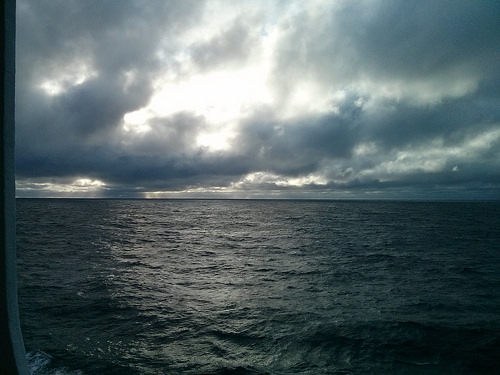
Photo by pburka
For our final installment, author Arielle Prose shares an excerpt from her story “A Sea Change.” You’ll be able to read it in its entirety later this summer in the anthology Elements: Tales From the Substratum. Enjoy!
AP: Retirement from the workforce is a long-awaited day for many people. Depending on the circumstances, you either look forward to the last day on the job or you don’t. Do you embrace the future with plans you cultivated, or do you regret leaving a job you love? Perhaps a little of both. Water is the element in this story, inspired by events in the author’s own life.
A SEA CHANGE
Arielle Prose
“There’s still time to change your mind,” Mindy interjects, a big smile on her face. “You can announce that it was all a hoax, that you’re not leaving and just wanted a party.”
“Ha, ha. You’re funny,” Twila says. “Another one of your begging-you-to-stay ruses, is it?” In contrast to her connection with Ruth, Twila’s bond with Mindy is more a mother-daughter relationship, Mindy being way younger than she, and always in need of advice.
Mindy pleads, “You know it is. What am I going to do without you?” She shakes her hands together in prayer, feigning drama. “Who’s going to help me with work when I’m in trouble?”
“Don’t be silly. You still have Ruth,” Twila replies.
They’re at the conference room door, on the other side of which voices can be heard.
Ruth looks at Twila and says, “Well, here we are. What are you? Scared? Go ahead, open the door.” But then she opens it for her.
“There she is!” Cruger announces. He has just finished writing “Good luck!” on the whiteboard, which is festooned with balloons.
A few people are gathered, standing around the table, which is bedecked with a flower centerpiece, and laden with pizza boxes, sandwiches, and a cake with “Congrats, Twila!” on it.
Twila, having expected something like this, is ready to smile and act all Gomer Pyle-style, shy and awkward, saying something like, “Aw gee folks, that’s mighty nice of you.” But upon hearing the big cheer that goes up, she suddenly is overwhelmed. “Thank you,” she simply says.
During the luncheon everybody chats and digs in. A few people from other departments stop in to add to Twila’s pool of well-wishers. She finds it no surprise that Natasha sits next to Claire, because Claire is an independent, neutral, take-no-sides sort, who gets along well with everyone, but rarely talks about anything personal. Without Betsy, Twila knows Natasha must be ill at ease.
Twila, sitting across from them with Mindy and Ruth on either side of her, thinks of a way to start a group conversation. “So, Natasha, how’s Kristin? What is she now? Five?”
Natasha nods and says, “Oh, she’s fine.”
“And how many months are you now, Mindy?” Twila asks, turning to her, “Five, right?”
Mindy kicks Twila under the table, but Twila ignores her and continues, “And you look fine, too. Glowing, as a matter-of-fact. When is your due date again?”
Mindy’s startled look turns into a shy smile, as she says, barely audible, “November fifteenth.”
Ruth joins in and asks, “Natasha, what can you tell Mindy to expect—I mean being a working mother and all.”
This gets Mindy and Natasha talking. While they’re discussing how flexible schedules are a godsend, Twila congratulates herself for having been the one to break the ice. She doesn’t know if from now on they’ll continue speaking to each other—probably not—but Twila feels exhilarated, on a roll now, riding the waves.
—
Want to read all the excerpts? Start with J. M. Levinton’s story “Airborne.”
Elements: Tales From the Substratum
Coming this summer


Photo by iStock.com/Katie Dobies
This week, author Anne Wagenbrenner shares an excerpt from her horror story “Walk Around on Earth, In My Body.” You’ll be able to read it in its entirety later this summer in the anthology Elements: Tales From the Substratum. Enjoy!
AW: My element for this anthology was earth, and I decided to tell a horror story.
I adapted an experience a friend had related to me–of a demonic creature who attaches himself to a human woman visiting New Orleans. She is suckered into “inviting” him in. . .
WALK AROUND ON EARTH, IN MY BODY
Anne Wagenbrenner
The eyes in Alix’s mirror morphed back into the eyes of the goat-man. Alix stared into them, wondering who the being was, and why he was in her mirror. Who are you? She thought at him. Is that you, Pete? Did you die? She was scared, because it was so weird; but the guy in the mirror didn’t seem harmful, just a little sarcastic. And it was probably all a hallucination, anyway, from the humidity. Why are you in that mirror? Can you come out of there?
In her mind, she heard a smiling, slightly mocking voice, “I’m not in the mirror, Alix.”
Her lower intestines became a solid block of ice as Alix realized what this meant. Don’t scream. Don’t scream. She felt him flowing throughout her body, like a slow, gelid river, and the scream ripped from her throat. Then there was nothing.
—
Next week, Arielle Prose will share an excerpt from her realistic fiction, “A Sea Change.” Come check it out!
Missed last week’s excerpt by R.G. Emanuelle? You can find “Pyromaniac” here.
Copyright © 2026 J.M. Levinton. Theme customization by il.lustr.us Media

