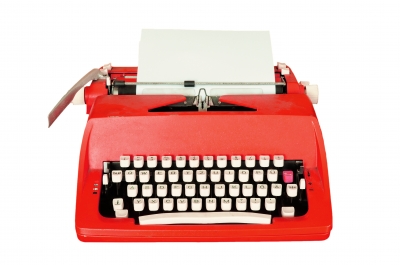
Where Did the Magic Go? The Production Phase of Writing

ID-1003088

*


I was all set to post Part 4 of Are You Ready to Publish Indie? this week when I realized that I needed to pause. This series moved from writing to editing to formatting and continued further and further from the creative part about being a writer.

The technical aspects (Part 4 will discuss book covers and ISBN numbers) are necessary parts of our work as an indie writer. But there are times when I’m slogging through it and feel mired in mud. Have I lost the vision of writing?

The answer (after eating large amounts of chocolate) is no, of course not. And if you get to that point where you’re elbow deep in proof pages and cover queries and creating accounts in preparation to upload your book and you worry that your muse is gone, well, have some chocolate. Go for a walk. Watch an old movie. Do something fun. Maybe think about your next book.

Isn’t that fun? Looking at a blank page and covering it with new worlds? Going down the path of a new story, living the lives on the page, pulling at your hair in frustration when your characters refuse to do what you want? And the exhilaration you feel when the problem is fixed and it’s flowing again?

I find writing to be fun. Frustrating. Sacred. Horrifying. Erotic. And a million other things. It’s life that spreads itself into a two-dimensional format that people read and turn back into three. It’s magic of the best sort.

That’s why I do it.

The flip side of the coin is that I’m learning to embrace the technical work so others can see the magic. I’m not there yet although I know that the learning curve for publishing Book 2 will be shorter (once it’s written, that is).

In the meantime, there’s some chocolate waiting for me on the kitchen table. And a few notes I want to scribble down for Book 2. It’s good to pause once in a while.


 * Image courtesy of federico stevanin / FreeDigitalPhotos.net



Are You Ready to Publish Indie? (Part 3)

ID-10073138

*


E-book or Paperback or Both?


So, you’ve been marketing away with the social media of your choice and your book is written and edited. Congratulations! These are major accomplishments. Now you need to decide how your book will be read.

Are you going to publish an e-book only or e-book and paperback?

There is a huge difference between the two. I admit, publishing an e-book is easier. You only need a cover (instead of a cover, spine and back), you can format the manuscript yourself in Word, and off you go!

But is your target audience known for being voracious e-book readers? How many people do you know have one? Out of a large number of family and friends, I can count on both hands the number of people who have an e-book reader. That’s it. And while I’m involved in marketing (see Part 1), word of mouth is a great way to build sales, especially for a new novelist. But first they have to read your book.

I decided to publish in both formats. I thought I’d produce a Word doc and use it for both e-book and paperback. Yes, I can see some of you shaking your heads. Hey, you in the coffee shop with the cappuccino and blueberry muffin, stop smirking. It’s a learning process!

Fortunately, other writers set me straight before I got very far. And I’m happy to share what I now know.

To put your paperback up for sale, the interior pages need to be formatted differently from an e-book’s. And while Word is fine for the e-book, it’s not the program of choice to put out a professional-looking product in paperback. Currently, Quark and InDesign are the most popular programs to do the work.

When I realized this, my heart dropped into my stomach. Not only did I not have the cash to buy either of those programs, I didn’t have the time or inclination to learn them. A friend who is a writer and graphics designer came to the rescue and offered her services. Otherwise, I would have had to hire someone.

(You may have noticed that putting a book up for sale on your own does have a number of costs. Hiring someone to create a cover, someone else to format the pages, getting an ISBN number…oops, I’m getting ahead of myself.)

See you next week.


* Image courtesy of adamr at FreeDigitalPhotos.net


Are You Ready to Publish Indie? (Part 2)

ID-100236272

*


Editing


You’ve written your book, hurray! It’s completed, you are done.

Not quite.

Did you run it through a spell check? Great. Move to step two. Did you have it edited? If not, then no, it’s not done. Go back one space.

If we, as indie writers, want the same respect as traditionally published authors, we need to do the work. We either do it ourselves or find someone to do it for us. That’s what happens when you own your own business. You wear many hats and it’s a lot of work no matter what. That doesn’t mean it’s not a joy, just that you need to be aware that skimping or cutting corners will most likely result in a weaker book and fewer sales.

You can pay to have someone edit but that’s an expensive route to take. I’ve written about joining writers’ groups and I stand by that as a good way to get valuable input. Your cat, alas, has no interest in the genre and your dog is too eager to please. Family and friends may side with either pet. Or they may simply not know enough to help.

That doesn’t absolve you from getting it done. Make sure your book is edited. Until then, it’s not done.

After listening to my writers’ group, I pruned and polished until I was happy with the result. I still had the final say but they made many good points that made my story better. During and after this process, I had proofread and edited my novel countless times and still found that I had typed in the wrong word in a sentence. I was so sure the book didn’t need to be reread again. I was wrong. (In case anyone is thinking that they wouldn’t make such a mistake, let me state that I’ve edited professionally in-house for many years and had nonfiction articles published in magazines. We’re still human. And we’re too close to our own work. Learn from my mistakes.)

Now, imagine I hadn’t caught that error. The book would have been published and hopefully, people would be reading, totally engrossed in the story. And then…a sentence doesn’t make sense due to that one word. And the reader gets flung out of the fantasy.

I’ve read too many reviews where the reviewer said it was a good story but too many spelling errors or continuity problems made it hard to get through. Why would a reader pay to read anything else by that writer? Oh, right. They wouldn’t.


To be continued….


* Image courtesy of Stuart Miles at FreeDigitalPhotos.net


Are You Ready to Publish Indie? (Part 1)

ID-100269115

*


Marketing


Decisions, decisions! One of the major things people forget is that with freedom comes all the work. We’re too busy preening over the fact that no one is going to delete that sentence in chapter four when we go indie.

That’s true. And whether that sentence should be deleted or not is a topic for another day. Do you have what it takes to publish indie? Let’s find out.

Writer Support: Do You Have It?

ID-100167253

*


I’m not talking about money. I’m talking about the emotional support that gets you through the maddening, frustrating, insane times of being a writer as well as the euphoric ones. Writer support can be all sorts of things: constructive criticism, marketing advice, hand-holding via telephone as you hit the “submit” key, or a sympathetic ear when someone’s absolute drivel breaks sales records while your own masterpiece struggles far back in the pack.

The best choice (in my opinion) is a friend who is also a writer. They’ll have your back and you’ll have theirs. And they will always question whether your spot to hide the body is a good one.

But let’s say you don’t have anyone. Where to go?

Meetup.com has many different writers groups. Some read and critique work. Some offer a space to meet and write—without talking—for one hour, surrounded by fellow writers. Chatting afterward is acceptable. I’m sure there are more but those are two types of groups that I’ve encountered.

Let’s say you live in an area where Meetup has yet to offer a group that appeals to you and you don’t want to start one of your own. Are there any colleges around? Bookstores? In today’s market, many bookstores provide more than sales. There might be a group they know of.

What if there’s literally no one you know face-to-face who can provide you with what you need? Though I believe real life contact is important, I also think the Internet has useful options. Searching “writers groups” and “online writers groups” offers a wealth of choices.

How do you choose?

You make a list. Write down exactly what kind of support you’re looking for. It’s a waste of time to join a group that offers critiques when you’re looking for someone to walk with you on the path of marketing. Be specific and work your way toward general.

Remember, too, that you’ll be providing support as well. It’s definitely a give-and-take relationship and you should be as helpful as you want people to be to you. Leeches aren’t appreciated.

I have my writers group. We’ve met for over fifteen years and have pretty much covered every aspect of writing and publishing while also critiquing each other’s work. We’re friends as well. But we didn’t immediately form into a perfect group like some mystical key-in-a-lock connection or love at first sight. As a matter of fact, we met when we all worked in the same office, the publishing division of a financial organization. It made sense: we gravitated toward fiction and it was a natural progression to meet. (Proof that writers groups can flourish anywhere.)

I’m aware of how lucky I am to also have supportive nonwriter friends and family. But it’s good to talk with a fellow writer and discuss final proofs and blues and swing into our different marketing approaches in the next breath without explanation.

So, take stock of where you are and what you need. No matter what stage you’re at, support is a steadying hand to work thorough a career that is more solitary than most. I wish for you that you find it and nurture it and pass it on.


 * Image courtesy of David Castillo Dominici at FreeDigitalPhotos.net


Writers Use Everything

ID-100148479

*


On Thursday, I went to the hospital for dental surgery. I was knocked out via general anesthesia and was scared to pieces as I walked in. I could convince myself I wasn’t really doing it up to the moment I walked into the OR in my hospital gown and saw the table with those round overhead lamps with the beehive-like bulbs.

I’ve jotted down notes about that experience. The way I felt, the machines and people around me. The smell of antiseptic and the color blue that pervaded. One never knows when something like that will come in handy in a story.

It’s a useful coping mechanism but it’s also the truth. Writers use everything. This time it was a deliberate recognition of that fact and helped me to get through something I didn’t really want to do. But it happens in so many other ways that come back later.

The tang of an orange slice in a salad.

The tickle in my nose after the grass is cut in summer.

The cold blankness of winter at night when there’s no wind and the stars are glittering above.

A paper cut.

It’s been said that writers live many lives. I believe that. But the main one, mine, is filled with all the moments that help me write the others. I think it’s best to experience first and write it down later rather than observe while it’s happening. It’s an important distinction. Live first, write second.

But yeah, writers use everything.


* Image courtesy of Just2shutter at FreeDigitalPhotos.net


Production and Fear

ID-100293862

*


My urban fantasy novel Magical Ties is now officially in the production stage.

I should probably put an exclamation point at the end of that sentence but I find myself taking deep breaths instead.

It was hard to hit the send key and email the manuscript to the wonderful friend who’s formatting it for paperback. I’m formatting the ebook, and while I’ve done that before for other books, doing it for mine has me almost frozen.

I suspect that the closer I get to publishing it, the more I’m going to drag my feet. Because once this book goes live, there won’t be any more excuses. As long as it’s safely hugged in my arms, there will be no criticism. No silence. Everything will remain in the realm of possibilities.

It’s a fact: If we never submit, we never get rejected. It’s the easy route, the route of “I coulda.”

I choose to go forward. I hope, no matter where you are on the journey, that you’ll do the same.


* Image courtesy of Maggie Smith at FreeDigitalPhotos.net


More Than Writing

  • February 02, 2015
  • Blog
  • No Comments

IMGP8694


On Saturday night, I was at the Arts and Crafts Beer Parlor (I kid you not, that’s the name of the place) and met up with six women interested in tapestry weaving. Two of them arranged the meet and were generous and welcoming with their looms and knowledge. The rest of us were newbies.

My creative pursuits have always been in writing (and, to a lesser degree, dance). But this past year, I’ve been exploring the world of yarn. Loom knitting and weaving are providing me with a new pathway in my thoughts, both in a meditative sense and with a different kind of creativity.

I can’t say it’s going to make my writing better or offer new plot ideas. In fact, I’m perfectly happy if it doesn’t. The idea of doing something that’s so divorced from writing is invigorating. That sounds opposite to meditative but it’s still true. It’s something new, something that requires my hands to help with the thinking.

A new pursuit is a good way to keep from getting stagnant. Sticking with that pursuit becomes a way to deepen the skills and lessons it provides. And who knows? Maybe it will drift into a story or two. Maybe it won’t. That’s not the point of it. And I’m content.


IMGP8700


When Your Book Goes Sour

ID-100140261

*


You’re writing your first novel. You get to page 155—155!—and then you stop, stuck. So you do more research. You wait, hoping that time will help. You reread it, because you need to keep all those complicated threads of plot straight in your head. Nothing helps.

Then you realize you made a plot error on page 86. Page 86. Everything after that has to be gutted.

The book sits for years, untouched.

Sound crazy? This is what happened to me. People stopped asking me when my book was going to be finished. And I stopped writing for years while that albatross sat on my shoulders. I dreaded even looking at those pages.

Eventually, there came a breaking point. I needed to write something.

So I started a story with no expectations. It felt so good to be writing again. I liked the people and what was happening in their lives and most of all, the joy of creating made everything in my life brighter. (That’s not to say there weren’t days and weeks of hair pulling as I wondered what was going to happen next on the page.)

Most of all, it didn’t count. It wasn’t the serious mindset of this is my first novel. It was fun.

But the joke was on me—that story grew and grew—and is now in the production stage as my first completed novel. Go figure.

Has something like this happened to you? Step away from the problem and start something new. Time will help you figure out if the first piece can be salvaged or not. And while you’re waiting, write something. It may surprise you.


* Image courtesy of Feelart at FreeDigitalPhotos.net


3 Truths About Creating a Book Cover

ID-10036046

You’ve finished your book. Your baby, your darling, is ready to be dressed for the outdoors. You need the right cover, one that will draw strangers near to admire and read. There really are people who judge a book by its cover, and if this is your first novel (as this one is mine), you need something to draw people closer.

Right now I’m in the middle of working with a talented cover designer who is displaying great patience with me as I muddle through. This is what I’ve learned so far:

1. Your cover designer is not a mind reader. 

If you give him fuzzy ideas, you’re going to get a fuzzy cover. I had vague ideas about it but didn’t bother to solidify them in my head. When my cover designer pressed me for details, I had to firm up those ideas in a hurry when what I really wanted to do was say, “I don’t know. Can’t you, you know, just do something?”

If you decide to go that route, don’t blame the cover designer for “doing something” completely alien to how you feel about it.

2. Don’t expect him to read the manuscript.

Chances are, he’s got other covers to create or another job or two. He doesn’t have time to read 350+ pages so he can “capture your vision.” He might even be a friend or relative. The rule still applies.

I wrote a synopsis of the plot with descriptions of the main characters, and added a three-page excerpt of a scene so he could gauge the tone I was striving for. Even so, I assumed he’d understand certain things and that’s where we fell off track. To repeat truth no. 1, your cover designer is not a mind reader.

3. Think about your cover before hiring someone.

The story was done. Therefore, I was ready to hire someone to create the cover, right? Wrong. My vague, hazy ideas floated in cloud shape with no definition but I was sure the cover designer would figure out what I meant. (Yeah, see truth no. 1—again.)

There are two things you can do that can help you figure out what you want on a cover:

  1. Look at other covers. Does your genre prefer to show landscapes? People? Airplanes? Are they abstract in design or do they show inanimate objects? A mystery cover showing a bloodied dagger next to a shoe and a tube of lipstick might work where the same cover would not work for a fantasy novel even if all those elements are in the story. Learn what people expect to see. That’s the framework for starters.
  2. Then it’s time to get specific. What is your story about? Who is your audience? How do you want them to feel when they look at your cover? A lurid picture of mangled body parts might not attract someone who wants to read a mystery where the murder takes place offstage.

The first background for my cover was too cheerful. I asked for a darker shade and it struck the right chord. Then I suggested a different style (after asking for advice from a friend who read the story) and it added the right depth. It’s a good start.

The reason the first color and design were wrong for my story was, well, see truth no. 1. I wanted to throw it at him and say, “Whatever you think works.” That way lies great unhappiness. I needed to have the vision before contacting a cover designer.

So there you have it. My cover is only about halfway done and that’s my fault. But it’s getting there.


* Image courtesy of scottchan at FreeDigitalPhotos.net


Subscribe via Email

Enter your email address to subscribe to this blog and receive notifications of new posts by email.

Archives
Recent Posts