Write Anyway

ID-1003088

*


The Muse touched my shoulder lightly, a butterfly’s kiss. Words rose up and flowed through my fingertips to the keyboard. I could barely keep up with the thoughts that formed perfectly on the page.

Yeah, right.

In the meantime, there are dishes in the sink, laundry to be done, and let’s not forget the housework. Oh, and I’m out of milk. And that’s just the day-to-day house stuff.

And those lyrical sentences that weave themselves into a story? If it happens at all, it’s because I’m sitting and writing. Without inspiration. Without the Muse, who, I think, laughed at the going rate and hopped a plane to Aruba. (I think she wants to unionize.)

I write anyway. Because that’s the definition of a writer. And it’s work. I write through the chatter and clanking of machines at a Laundromat. Through the swaying and stops of a subway car. Through the absolute silence inside my own head as I sit in the living room in front of my computer and stare at a blank screen.

But even those blank pages will get words on them eventually. Because I’m there, putting in the time and effort. So here’s the most important tip I can think of: If you’re not in your seat ready to work, the odds are good nothing will get written. Show up. Write.

Write anyway.


* Image courtesy of federico stevanin / FreeDigitalPhotos.net

No Time to Write? 5 Places That Will Give You Time

IMGP8328


I’ve read of people who get up an hour early and write before officially starting their day. More power to them. My family and friends would laugh themselves silly at the idea of me doing that. I’ve been known to growl at people trying to wake me early. And mean it.

So I came up with alternative places that carved out hours of writing time and thought I’d share my list here:

1. Bus/Train

I tried this because I was desperate and bored. I whipped out a little notebook and wrote, and to my amazement I completed two pages by the time I reached my destination. (Be prepared for strange looks and even having people move away from you. I’m still not sure if that was because I was using paper and pen instead of tapping away on an electronic device or because they thought I was writing about them.)

2. Bathtub

If you’re facing a drought, this is still a viable choice. I never said you had to fill the tub, did I? Get comfortable, write, and when you’re done, take a quick shower. No one will know the truth and you’ve carved yourself up to an hour of writing time.

3. Waiting Rooms

The only down side of writing here is to make sure you’re not so engrossed that you miss your turn. (Yes, this has happened to me.)

4. Standing on Line

I’ve scribbled a few notes while on line at the supermarket, the post office, and the bank. Go on the weekend when the lines are really long. Remember to occasionally mutter, “I forgot to do that,” from time to time, and people will think you’re making a to-do list and ignore you.

5. Laundromat

You can get a lot done during the wash cycle. Once your laundry’s in the dryer, you need to pay attention to it unless you like ironing or giving up your favorite shirt to dress a teddy bear in. (Multiple washes during the week or both days on the weekend will double the time if you’re desperate.)

And there you have it. Five places that will give you time to write. They may not all be possible for you but I hope they will give you ideas for yourself.


Method Writing

ID-100126124

*

You’ve heard of method acting, where actors immerse themselves in a character. Sometimes, method writing can be a great way to enrich the scene I’m writing and have a little fun while I’m at it.

I once wrote a story that took place on a movie set. I interviewed a number of local actors but felt the need for more. So I took a couple of acting classes.

It was fun. And uncomfortable. And enlightening.

I began looking for classes that were outside my comfort zone. I took an all-day rock climbing class (where I pitifully clung to the side of the cliff and waited for my instructor to say I could rappel to the ground). I’ve taken cooking classes, language classes, photography classes (where I still feel a steep learning curve), and the list for the future remains long and exciting.

Writing can’t be done in a vacuum. Doing research online and in books is good. Sometimes it’s the only way we can get the experience we need for our stories. But other times? Go for it. Audition for a play. Jump out of an airplane. Music stores often have people looking to earn a little cash by teaching an instrument. I found the rock climbing school through a camping goods store. And sometimes just putting the word out can bring what you need to your doorstep.

Has it made my writing better? I like to think so. My scenes with the actors were written with more confidence—first, because I’d experienced a tiny bit of what they do and second, because I made friends in the class who were happy to answer my questions. Should I ever include a scene with rock climbing, I’ll remember how my arms felt like cooked spaghetti for days and that long climbing pants are better than capris.

A taste is all I need. Just enough to get the feeling right. The vision right. And then it’s mine to play with.

So take a chance! Sign up for a class, go on a trip, volunteer for a project that will enrich your characters. And yourself.


* Image courtesy of Victor Habbick / FreeDigitalPhotos.net


On Vacation? Don’t Write

IMGP6971


Once upon a time, I breathed dry desert air and watched dust devils rise from the ground like smoke from a campfire.

I was on vacation in Arizona, visiting friends. I absorbed new sights and smells and had a wonderful time even though a little guilt niggled at me. I should have been writing! Look at how different it was! Gardens of gravel, heat that didn’t leave me clammy, mountains I could walk up with no tree cover. This could all be fodder for a new story!

The minutes I tried to write were torturous.

Then I went home. Within two days, I wrote a short story that took place in a fictional town, using that slow, hot summer feel along with adobe-colored homes that were reluctant to stand out from the earth and yes, those dust devils. There was dark as well, because sunlight doesn’t change what people do. But that was the made-up part.

It’s fine to soak up atmosphere and write notes or phrases to remember for later. But otherwise, stop writing. Be inside the experience instead of trying to think of ways to describe it. Feel the atmosphere. Taste the food with nothing but pleasure on your tongue (unless, of course, the food creates a different, horrifying experience). Enjoy the sights and sounds that are so different from what you’re used to.

Your camera? Take pictures to enjoy looking at later. But if you’ve forgotten your camera card or your phone dies, it’s okay. Live inside the moment. Refresh. Recharge yourself. Take the time to unwind. Stop looking at every new thing with an eye to using it. You will, you just don’t need to mentally force the connection.

Have a good vacation.


The Fine Line of Kick-Ass Characters

london-museum-samurai-201836-o

*


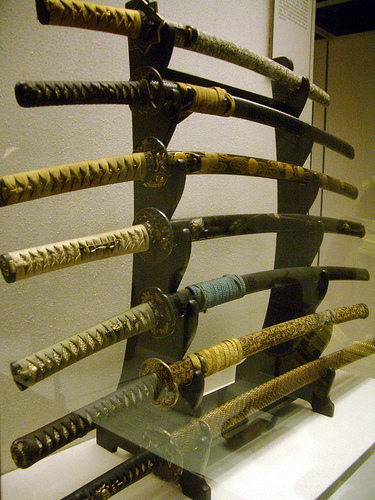
I’ve read a number of urban fantasy novels where the main character was a heroine who knew multiple languages and ten different martial arts, and had fifty different weapons packed into her vehicle and on her person.

As a reader, some of these worked and some left me cold.

It took me a while to realize why. I needed to connect to the character. If all she went through was some general angst while knocking out eight drunk vampires in a bar, I’d continue reading but would skip future books from that series.

Connection is important. It’s also a hard line to find. In fantasy, escapism is usually the reason I read the genre. I want to be away from the workplace, the bills, the supermarket. Take me to someplace that’s exciting and enthralling while I sit safely in my seat.

But make me care. Otherwise, it’s a ride on a roller coaster that lasts a moment or two and then fades away. And there are other rides to try. If you want me to keep coming back, make me feel.

That doesn’t necessarily mean I want tears and heartbreak. I’ve read fantasy that made me relate even while I giggled. A kind of “we’ve all had that happen” association. Or we know someone it happened to. Or it was just plain funny. Another kind of bond.

As a writer, the same rule applies. If I don’t care about my characters, who will?

In the novel I’m currently wrapping up, there’s magic and mayhem and even a car chase. But most importantly, what made me get up and write was wondering and worrying about the people on those pages. Were they okay? How were they going to manage?

This is what propelled me to write. Something I wanted to read.

So, write a story. If you want, give her the skills of knowing multiple languages and ten different martial arts with fifty different weapons packed into her vehicle and on her person. The characters can also be male or alien dragons who like to drive cars, it’s all fine. But make sure I care.


* Picture courtesy of http://www.everystockphoto.com/photo.php?imageId=2190999&searchId=43f4d8bc1df7e6ecadb296b4e95620c5&npos=13

How Much Does a Demon Bleed?

IMGP8220

When I asked my doctor how much blood loss results from stabbing a demon with a steak knife, I got an answer. (It was only after I repeated the story that someone asked how she knew that. Hmm.)

I once called a few official sources to inquire about gun laws in their county where demons exist. I approached them seriously, identified myself as a novelist and politely asked for their time to answer one question. I also made sure I didn’t call during a four-day week (when work is piled up) or at the end of the day when they’d like to wrap up and go home. I’ve been happy with the answers and gratified that twice I was able to make them laugh.

(In rereading the above, I realize I should clarify that as far as I know, there is no county where demons exist. Just sayin’.)

Worldbuilding is an important aspect of a fantasy novel. If our rules make sense, the reader will accept them. In urban fantasy, most of the rules for building a believable world are already in place. In my novel, it’s still illegal to make a left turn on a red light. And pizza needs oregano. (Okay, not for everyone. I’m not a militant on that. Just pass me the oregano for my slice and we’re fine.)

I’ve read dozens of vampire stories set on this planet where the rules for vampires change. Some never eat. Some do. Some can go out in daylight, others can cross water, and a few even cook with garlic. How do all these contradictions work?

It’s simple. Inside those finite pages of a story is a world that writers make logical. We set up the rules and the reader accepts and (hopefully) enjoys them. Presenting the normal along with the fantastic is what makes it work. It’s one of the reasons why urban fantasy is my genre of choice. I know how things work in New York City and what I don’t know, I can find out. If I want to add a demon or ghost to the mix, the rules and regulations for us humans are already in place. (Apologies to any nonhumans reading this.)

But the rule remains: The setting has to make sense. When I read, I want to immerse myself in that world. I will accept that bananas grow in midtown Manhattan in the winter if it’s been set up properly. If the sky in the Bronx turns from blue to red-and-green stripes with no warning and no explanation later, I’m going to put the book down.

Research. Make sure you aren’t defying the law of gravity without a good reason and that the reader understands it. Getting the information I needed on demon stabbing helped me to write a better scene. A more believable scene. Although, yes, now I’m wondering how my doctor knew that….

Are You a Writer? (Part 2)

IMGP8155


You want to be a doctor? A bookkeeper? A welder? Go to school, get your training/degree(s) and away you go. No one doubts what your job is. You’re validated by those pieces of paper. And so you should be. You worked hard to earn them and that’s great.

But a writer? We come from everywhere. Some have multiple degrees, some never finished high school. We don’t fit into any “training” category so no one gets to put their stamp of approval on us and say, “Yes, you are now officially a writer.”

And that’s the problem.

Writers get publicly validated when they publish. (In today’s indie publishing—as opposed to traditional—some might say that writers get validated when they have readers.)

But there’s no leading-up-to-it certificate. No visible, tangible award to show how many hours we’ve sweated, how many social events we didn’t go to, how much sleep we lost so that we could make the time to write.

So it’s not enough to say to ourselves “I am a writer.” It’s important, but it’s not enough.

Step two is standing (sitting) strong and writing. Writing against the looks, the winks, the rolling-of-eyes when they think you don’t notice. It’s about validating yourself. Whether you go traditional or indie, know that you are a writer, no matter what.

Write anyway.

I write, because if I didn’t, my insides would implode. I write because I need to, just like I need to eat and drink.

Do I want outside validation? Oh, hell yes! But in the meantime, I’m validating myself. I’m a writer and I’m writing.

Part One

Are You a Writer?

IMGP8155


Well, are you? Look around right this second. No one is seeing this but you. And you don’t have to say anything out loud. So answer the question.

Are you a writer?

“I haven’t published anything.”

“It’s just a little thing.”

“I write but not like [fill in name of writer].”

I didn’t ask you that. One more time:

Are you a writer?

No? Not sure? Not feeling worthy to admit it? Why? Well, there’s a few reasons why you might be feeling that way. Let’s tackle one.

I always knew I could write. Everyone knew I could write. But I never said “I’m a writer.” That’s different, I’d argue. I’ve had nonfiction articles published but the fiction stuff, that’s just different. I’m not published in that.

I began writing a novel, got stuck halfway, and couldn’t get past it. So I stopped writing while that albatross sat on my shoulders.

And the years rolled on.

It took a number of events before I looked in the mirror and said, very quietly, “I’m a writer.”

Nothing happened. Lightbulbs didn’t shatter, the mirror didn’t crack, the floor didn’t tremble. There was quiet in the tiny bathroom. No big deal. I’m a writer. Of course I am. Now to put my money where my mouth was.

I began saying it to people when asked what I did. “I’m a writer, working on my first novel.”

No derisive laughter appeared at the statement. A lot of times the person would say, “That’s amazing! You know, I’ve had this idea for a book for years but somehow never got around to it.”

Or:

“That’s great! As soon as I retire I’m going to write a book.”

(These kinds of comments will be fodder for a whole different entry one day in the future.)

But the point remains. I accepted that I’m a writer so everyone else did as well. I can hear one of the “Yeah, but” comments as I type this:

“But I don’t have anything published. At least your articles were published.”

True. But you know what? No one asks what I’ve published. As soon as I mention what I’m working on now, the idea is accepted. I’m a writer and I’m writing.

Isn’t that what writers do? Is that what you’re doing? Are you writing?

Then you’re a writer.

Seems simple, doesn’t it? So why doesn’t it feel that way?

To be continued….

Start in the Middle

“Beginnings are hard.”

“I don’t know where to start.”

“I have to explain so much I’m afraid no one will be reading when I get to the real story.”

I’ve heard these words from other writers. I’ve said these words. I’ve had stories that were ready to leap onto the page—if I could have just gotten started.

So I began in the middle. My characters knew who they were, what they wanted to do, and jumped right into the action. I decided the beginning could be written later.

That’s the neat and clean version.

What actually happened was, I was riding the bus to the subway when dialogue went off in my head. I had a pen and the back of an envelope and began writing as fast as I could to capture it. These people were completely involved in their drama and it didn’t matter that I had no clue what went before.

And a funny thing happened. In the end, only a few paragraphs were needed to set up the story. If I had waited until I had a perfect beginning, it would have all been lost. Starting in the middle was the way to begin.

So, what about you? Are you letting the beginning stop you?

Subscribe via Email

Enter your email address to subscribe to this blog and receive notifications of new posts by email.

Archives
Recent Posts