
I used to say I didn’t but realized I do. Just not the way people think.
I outline backwards.
I used to say I didn’t but realized I do. Just not the way people think.
I outline backwards.

I know people who jump into November’s NaNoWriMo with enthusiasm and verve. (For those who don’t know, NaNoWriMo is an event where people pledge to write a novel—50k words—in the 30 days of November.) I know people who have successfully participated and I am in awe of their accomplishment.
I’ve heard this numerous times and I don’t understand it. Do people think they need to live the life of James Bond or sitcom characters?
 *
*
I wrote about what to do when writers get into a rut (see Writing Rut? Stretch Yourself) and took my own advice. A beginners’ piano class had a spot open unexpectedly and I signed up. I attended one class, had to miss the second, and suffered agonies that I wouldn’t be able to keep up. Class three was the other night and proved, like most fears, that all the nail biting was for nothing. Everything was fine. I hit wrong notes, pressed multiple keys instead of the intended one, and wondered if I’d ever get through “Ode to Joy.” Yes, that piece.
You write speculative fiction that’s mostly horror, like your recently published novel Snare (The Waiting Dark Book 1). Why horror?
The world’s a scary place. Writing about bizarre bad stuff helps me deflect what’s out there. It allows me to mold it into something I can deal with.
I heard you went a little above and beyond in your research. Something about duct tape?
Oh no, the duct tape! One of my characters was bound hand and foot and gagged with a strip of duct tape. I had to get her free but didn’t know how, so I asked my husband to tie me up (please stop snickering) and slap some tape over my mouth. I learned two things: duct tape smells vile (see the anagram for evil?), and sometimes there are ways to get it off your face without using your hands.
Good thing you didn’t ask about the crawlspace incident.
The crawlspace incident?
No way—I’m not going into that one here.
Okay, I’ll let that go this time. Is there a reason you went with traditional publishing instead of indie?
I wanted the structural support and industry weight a publisher can offer. Indie publishing is a lot of work—and to do it right is even more work. The whole marketing issue aside, I wanted to focus more on the writing and less on being general contractor to formatters, artists, and distribution entities. I see what indie authors go through and am in awe of the stamina required to do a fine job on both the writing and the business ends. I’m already involved in indie anthologies, but maybe someday I’ll be brave enough to attempt an indie novel or novella.
Do you have a writing routine?
I sit at the desk, push the cat off the keyboard, and vacuum the fur from the keys. Then I start writing.
Actually, my routine varies depending on what else is going on—editing work, family obligations, appointments. What I have is a certain amount of writing that I want to complete every week or every two weeks. I prefer writing in the morning until I reach a logical stopping point or have to turn to something else, but if mornings don’t work then I’ll do whatever it takes to reach the goal I’ve set for myself.
Any advice for writers?
Grow a thick skin. Be persistent. Do not give up. If you throw enough pasta against the wall, you will eventually learn how to make viable patterns that stick. Be professional. Be kind to your fellow writers. Be grateful to your readers. Love your pets.
Where can we find Snare?
It’s on Amazon.com, BarnesandNoble.com, and Smashwords. It can also be purchased through Permuted Press.
Where can people find more information about you or your other writing?
My website is cvnelkin.com. I’m also on Twitter (@cvnelkin) and Facebook.
 *
*
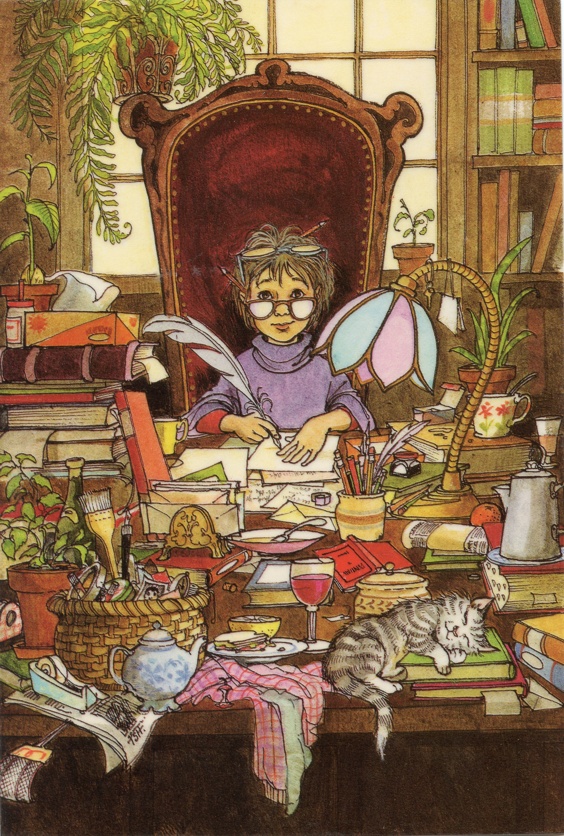
I once worked in an office where I had a large cubicle as my office space. My desk, spare chair, and even part of the floor had stacks of paper arranged in seemingly haphazard ways. My supervisor came by one day and asked me to straighten it. I looked at the mess and replied, “It can be neat or I can get the work done.”
The way the surroundings are is the way my mind works. As one writer friend says, “One big whirlwind in a stewpot.” There is a threshold—too much clutter and I can’t concentrate. Too little, and my mind empties into blankness.
I do have a system for the mess, although darned if I can explain it. But I know when I’ve crossed it. There’s a weight on my shoulders that forces me to think of the clutter instead of the next scene. Deadline or not, the pen goes down, the computer gets turned off, and I begin putting things away and shredding paper.
The opposite end of the scale is when company goes home. I tend to look around and wander aimlessly through the space, searching for those elusive ideas that faded into the woodwork. It takes a little time but a few scattered books and papers and a sweater or two tossed on a chair, and I’m ready to consider work.
What about you? Is clutter a help or a hindrance to your writing?
* Used by permission: © 2015 Trina Schart Hyman and Pawprints, Inc.
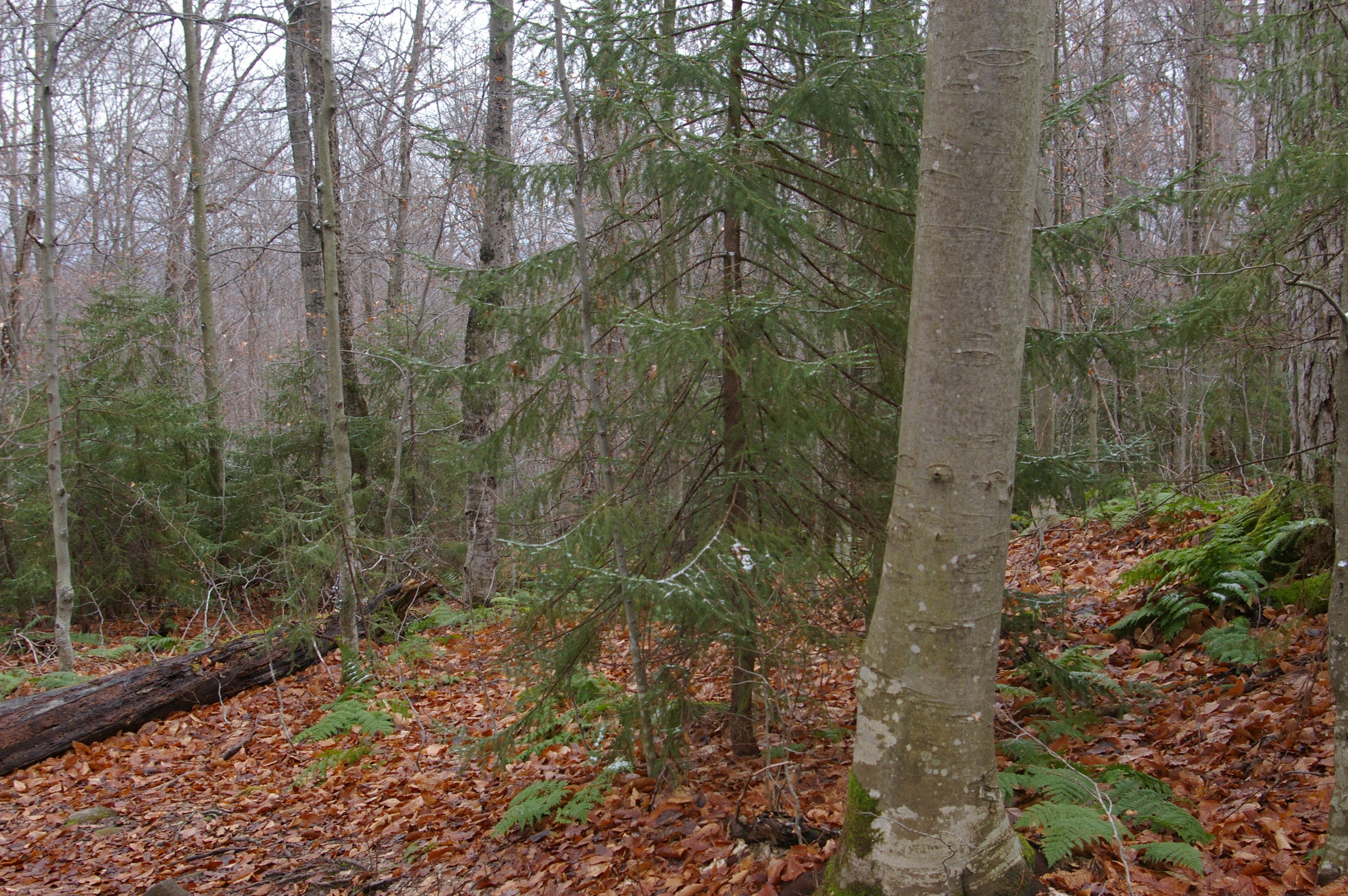
I am not a winter baby. Sure, there are those moments when I step outside into cold, crisp air on the way to meeting with friends and then warm up with a hot chocolate.

I was going to write something generic here. About writers and pets, with maybe a few quotes scattered about. But the fact is, after being without a cat for three years, there’s a new guy in the house and I want to write about him. Bear with me.
He’s about five years old and what’s called a Lynx Point Siamese. I had no idea what he was, just that he was friendly, with an unusual coat and blue eyes that blinked a hello through the cage bars. And, unwilling though I was to consider it, he entered inside my home, already named Frankie. (Ole Blue Eyes, although his tone is less melodious.)
For the first few days, I wrote and edited while he found a hidey hole to make himself comfortable. It was as though there wasn’t a cat in the house; very odd.
It’s been a week, though. He’s not yet comfortable with the idea of sitting in my lap as I write. But he sleeps nearby on the couch, sprawled out on his back in a way that comforts me. I know he wouldn’t be sleeping so unrestrained if he didn’t feel safe.
There will be two cats entering my characters’ lives in my next novel and the demanding tone in Frankie’s voice reminds me how individual he is—and to make sure my fiction-cats offer their own voices on the page.
(There—I connected my cat to writing.)
He’s a little too serious and well-behaved but I hope, as he realizes he’s here to stay, that that little streak of devilry I see when he plays with a toy comes out. Though not while I’m correcting proofs. (Yes, I know he’ll lie down right on the spot I’m trying to read, but I can dream, can’t I?)

 *
*
It happens. The writing hits a wall. Or the ideas are there but you don’t feel like writing them. The sun is out or the air is cooler, and everyone else seems to be going and doing, leaving you at the keyboard (even if you are sitting in a café with a laptop and your favorite drink). Everyone seems to be moving, and you’re not.
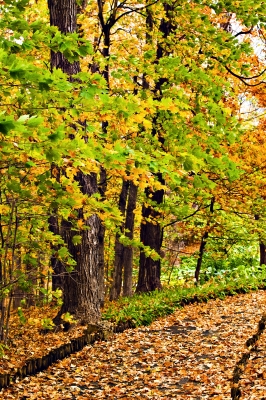
Maybe it’s seasonal. Autumn is the season of a new school year, and after decades of going, I believe that’s imprinted on us. At least, I look outside and see students on their way and the memories make me both glad and wistful that I’m not one of them.
 **
**
But why not take a class? A single, solitary out-of-the-comfort-zone class? It has a lot to recommend it.
A teacher can bring us ideas and merge them with different viewpoints—all in one space. Interaction with other students can bounce those ideas higher. And, depending on your topic, new avenues can enrich your writing.
It can be knowledge or a physical skill. Something that our body will react to and yes, once again, that gives us information we can’t get any other way. When I took a tap dance class this summer for the first time, I was suddenly aware of the muscles and balance needed to not scrape the floor.
In the way of eating vegetables we detest. Learning something that’s unfamiliar puts us in the category of beginner. We may think we’re prepared, but in an area we know nothing about, it’s a humbling experience. And that can make us return to our writing with a deeper appreciation and thankfulness of what we do and do well.
So, what do I have planned? Five years ago I took a beginner piano class and hoped to do that again, but unfortunately I waited too long. All the beginner classes were filled. While that means I’ll need to wait until next semester, at the same time, I wonder how many of those classes are filled with writers.
***
* Image courtesy of artur84 at FreeDigitalPhotos.net
** Image courtesy of Serge Bertasius Photography at FreeDigitalPhotos.net
*** Image courtesy of amenic181 at FreeDigitalPhotos.net
Writing fiction in a post-9/11 city makes for some difficult choices.
There’s no doubt that my beloved city is still scarred. When other places offer a brief news item on the day, we air the entire reading of the names of the dead, about four hours’ worth. We have a museum that walks people through what happened and how we coped. And are coping. There are thousands of people still receiving medical help (physical and mental) from the aftereffects.
But in writing terms, it’s a problem everyone faces. Do we mention a specific event? On the plus side, it gives our story a sense of time and place. On the minus side, it dates it. And for some people, mention of a real tragedy inside a fantasy novel might take them out of the escape they wanted.
 *
*
A fellow writer once asked if any mention of it should be made in her novel. Her book had been started long before that tragic event and a group of us told her not to change a thing. Fortunately, the area she placed her characters in and the events that she created did not require it. Including it would have been a distraction. So she left it alone.
My own soon-to-be-released novel takes place on Long Island. I chose not to bring in any mention of 9/11. And when my main character needed to go into the city, she went to a different area.
I don’t know if future books will have my characters referring to anything or pointing to a landmark or if they’ll just continue walking to sit in Battery Park with no mention of the recovered globe that is there. Or whether I’ll make sure there’s no reason for them to go to the area at all. It’s a hard call, but it’s a call required of every writer who uses a real place, not just because a horrific tragedy occurred in their backyard.
Copyright © 2026 J.M. Levinton. Theme customization by il.lustr.us Media